One common mistake might occur while creating a search results page in Elementor – picking the wrong page template. Many users create a WordPress search template instead of a WooCommerce search template.
Make WooCommerce search results in the right way
Notice: if you’re not very familiar with Elementor, please read our Elementor guide first.
To begin with:
1. Go to Elementor > Theme Builder.
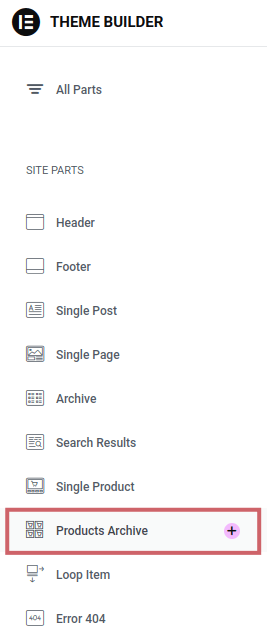
2. Create a Products Archive template.
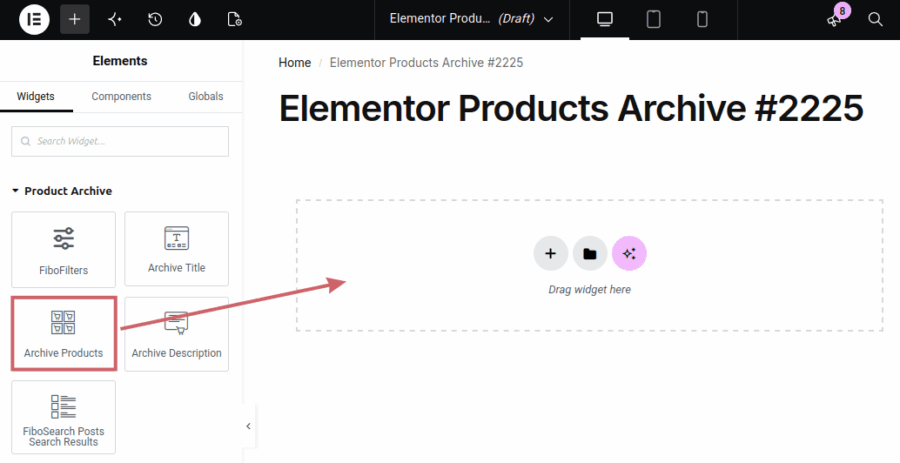
3. Add Archive Title and Archive Products widgets to your template.
4. After finishing creating a template, set the condition to Include > Search Results.
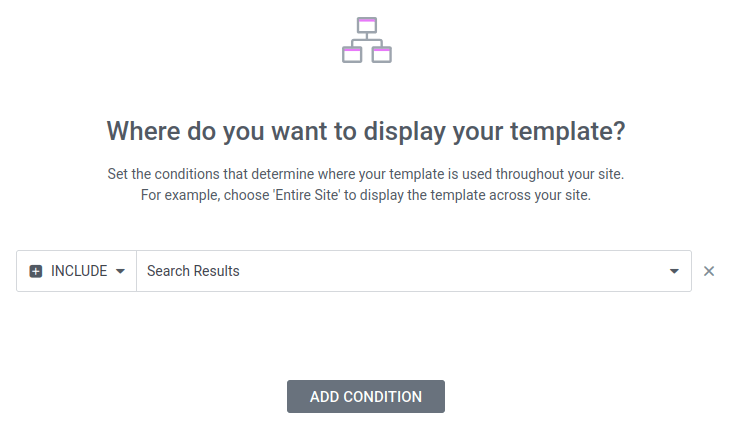
That way, the search results page will be created properly.
Still doesn’t work?
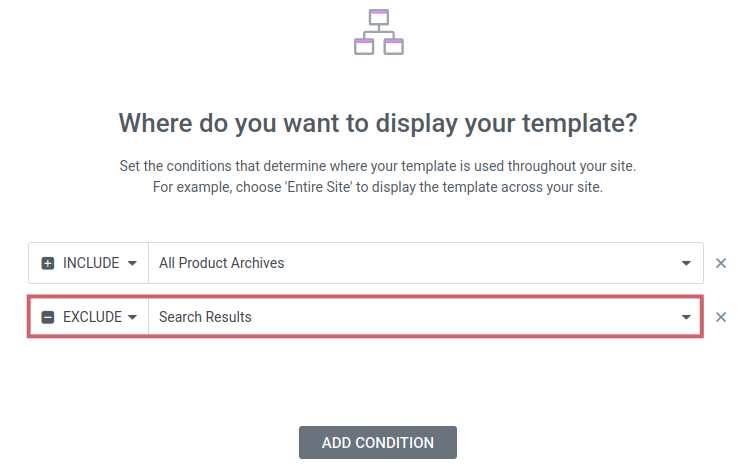
Check if you have more than one Products Archive template under Elementor > Theme Builder > Products Archive.
If so, open all templates that aren’t “Search Results” and add an extra condition: Exclude > Search Results.
Note:
Sometimes excluding “Search Results” from the Shop page still doesn’t work. In such cases, create an empty fibosearch-search-results.php file in the root of your child theme and paste the following code there:
<?php
get_header( 'shop' );

$frontend    = new \Elementor\Frontend();
$template_id = 100; // Your search results template ID

echo \Elementor\Plugin::instance()->frontend->get_builder_content_for_display( $template_id, true );

get_footer( 'shop' );
The $template_id variable is the post ID of the Elementor template with WooCommerce search results. You can find this ID on the URL. Go to Elementor > Theme Builder > Products Archive and open the template with the search results. The URL should be like this https://your-domain.com/wp-admin/post.php?post=100&action=elementor. In this case, the $template_id is 100, but in your case, it will be a different number.
After creating this file, use the below snippet to force Elementor to use the newly created template.
add_filter( 'template_include', function ( $template ) {
	if ( isset( $_GET['dgwt_wcas'] ) ) {
		$search_template = locate_template( 'fibosearch-search-results.php' );

		if ( file_exists( $search_template ) ) {
			return $search_template;
		}
	}

	return $template;
}, PHP_INT_MAX - 1 );
ⓘLearn how to add this snippet to your WordPress.